
How to Check Criminal History in Lee County
Begin a Lee County criminal history check by defining the record you need. Filed misdemeanor, traffic, and preliminary felony matters belong in Virginia Judiciary's Online Case Information System-Statewide Search, known as OCIS 2.0. Felony trials, indictments, and district-court appeals belong with the Lee Circuit Court clerk. Sheriff arrest publications come from the Lee County Sheriff's Office, while the Virginia Department of State Police, Criminal Justice Information Services Division, Civil & Applicant Records Exchange supplies the statewide repository product. Current custody may require direct local confirmation, the VADOC locator, or the federal BOP locator.
Gather a full name, spelling variants, a rough date, the arresting agency, and a case number if one is known. A birth date may help distinguish people, but public court results must still be matched by locality, charge, and event date. When the aim is to review your own official Virginia history, the court screen is only a lead. The mailed VSP record check is the repository route, and a certified disposition from the clerk is the best proof when a result needs correction.
- Search OCIS for Lee General District Court and participating Circuit Court cases, using a name, case number, or hearing date.
- Check the sheriff's date-based archive if the question concerns an arrest the sheriff published.
- Identify the agency and court behind the result. A town police report does not move to the sheriff merely because the case is heard in Jonesville.
- Ask the correct clerk or law-enforcement office for the underlying file when the online summary is missing or too thin.
- Order SP-167 for a Virginia repository history, then compare any disputed entry with a certified court disposition.
Why Lee County Records Split
A single arrest can leave records with at least four custodians. The officer's agency writes the incident or arrest narrative. A custodial facility creates intake data, fingerprints, a booking image, property entries, and screening records. A magistrate and the courts create process, charge, bail, hearing, and disposition entries. Fingerprint-supported arrest data and reported outcomes then flow to VSP CARE. These files serve different jobs, update on different schedules, and do not share the same public-access rules.
The practical access map is simple: sheriff or town police for their own reports, the General District or Circuit clerk for case files, VSP CARE for an official Virginia history, and the correct custody agency for confinement or supervision. Juvenile matters, sealed cases, protected victim data, and active investigative details may not appear. An empty screen proves only that the searched system returned no public match.
| Question | First official channel | What it can confirm |
|---|---|---|
| Was a charge filed? | OCIS or the correct court clerk | Case number, charge, events, and disposition |
| Did the sheriff publish an arrest? | Lee sheriff arrest archive | A date-organized agency publication, not guilt |
| What does my Virginia history show? | VSP CARE Form SP-167 | The authorized name-based repository response |
| Where is a person held? | Local sheriff, VADOC, or BOP | Custody within that specific system |
Official Virginia Background Checks
Virginia has no open instant conviction-name portal. The public route is the Virginia Criminal History Record Check, Form SP-167. The subject section requires identifying details, a signature, and notarization. If the result goes to another person or agency, the recipient section also has signature and notary requirements. One form is mailed for each request to VSP CARE. VSP gives an approximate normal turnaround of 15 business days after receipt and offers no same-day or expedited option.
The standard Virginia history search costs $15. A combined criminal-history and sex-offender search costs $20. SP-230 is reserved for eligible statutory users and is not a substitute public channel. SP-325 supports fingerprint-based national checks for authorized care organizations that have established a VSP account. For your own federal Identity History Summary, use the FBI route described below. No official commercial fingerprint enrollment location was verified in Lee County, so confirm whether a local law-enforcement office currently offers civilian fingerprint cards before traveling.
| Official product | Method | Researched fee |
|---|---|---|
| SP-167 Virginia history | Signed, notarized form mailed to CARE | $15 |
| SP-167 history plus registry | Combined selection on the mailed form | $20 |
| FBI Identity History Summary | EDO order plus fingerprints | $18 FBI fee |
SP-167 Lee County Record Route
Use the VSP forms page to reach the current criminal-history forms rather than saving an old copy. The SP-167 generator asks for the product, purpose, full name, maiden names or aliases, sex, race, birth details, address, subject signature, notary block, recipient information when needed, and payment details. Read the generated instructions before mailing because forms and fees can change.
The official forms page also shows how Virginia separates public name checks from fingerprint routes.
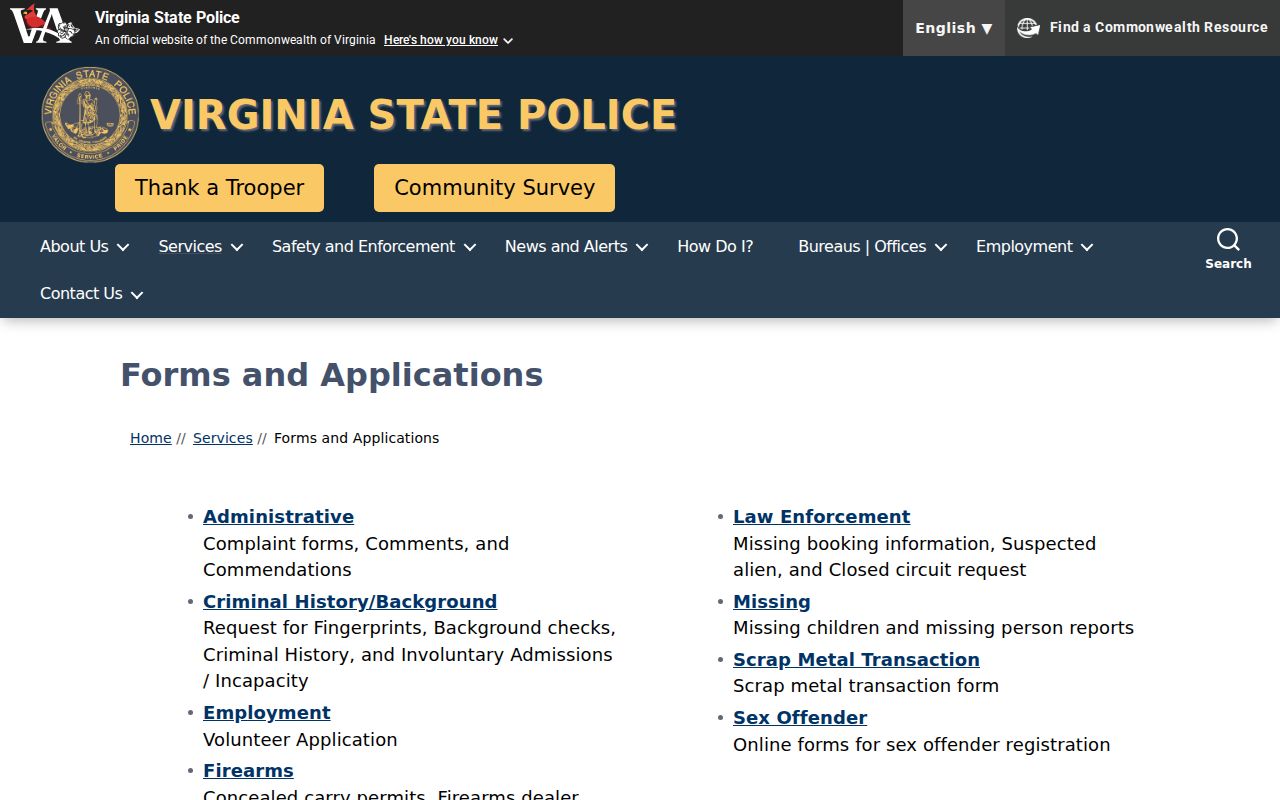
That distinction prevents a Lee County court search from being mistaken for an official statewide repository response. If a record is wrong, obtain the source disposition and ask the office that originated the error to correct it. CARE handles Virginia repository review, while the FBI maintains a separate challenge process for its Identity History Summary.
Types of Criminal Records
Lee County criminal records are grouped by the event and office that created them. Police and sheriff reports describe an allegation and response. Booking data records intake and custody. A magistrate or court issues process and opens a case, while the clerks record hearings, pleas, orders, outcomes, and sentences. CARE links qualifying fingerprint-supported arrest cycles with dispositions reported to the state repository. Each record can be accurate for its own stage yet still differ from the next.
Warrants may stay outside public search while unserved or sealed. Adult state custody and supervision belong to VADOC, but local pretrial custody does not become a VADOC record merely because the arrest happened in Virginia. The VSP registry is a separate public-safety system. Juvenile court data is protected and unavailable through the online Judiciary case search.
- Arrest and booking records: agency reports and custody-intake fields that do not prove conviction.
- Criminal court files: one prosecution organized by court and case number.
- Repository histories: authorized VSP products that connect reported arrest cycles and outcomes.
- Warrant records: court or magistrate process whose live status must be confirmed with an official office.
- Custody, supervision, and registry records: separate systems maintained for distinct legal purposes.
Four Lee County Arrest Records
The Lee County Sheriff's Office publishes its own arrest archive, but that archive is one layer. It may show that the agency listed an arrest in a certain period. It does not supply the full incident narrative, prove present custody, or reveal the final court result. Jonesville Police, Pennington Gap Police, and VSP also create their own reports, so the badge on the event determines where the narrative begins.
The sheriff's public presence gives Lee County researchers a direct official starting point.

After finding an arrest publication, check the matching General District Court case and, for an advanced felony, the Circuit Court file. Contact the local custodian or use VINELink for current custody. For the narrative not shown in the archive, send a focused request to the arresting agency with the incident date, place, number if known, record sought, delivery format, and a request for a cost estimate.
Note: A sheriff archive entry records an arrest publication, while the court disposition records how the filed charge ended.
What a Lee County Criminal Record Shows
A Lee County criminal record may display identity data, agency and event dates, charges, Virginia Code sections, a court result, and sentence or supervision terms. The fields depend on the source. A rap sheet organizes arrest cycles and linked outcomes. A court screen organizes one prosecution. A booking file emphasizes intake and custody. Public views remove Social Security numbers, financial-account data, sealed material, and protected victim or minor information. Match the field to the source before drawing a conclusion.
Read the disposition apart from the charge. A charge states the accusation at a given stage. The disposition says what the court did with it, and the sentence records the order after a conviction. Arrest and complaint dates may differ from filing and hearing dates. A common name should be checked against the court, locality, case number, and known dates before it is treated as a match.
| Name & Identifiers | Names, aliases, birth details, agency identifiers, and fingerprint linkage where authorized. |
|---|---|
| Arrest / Booking Data | Arrest date, agency, charge at intake, booking identifiers, and bail or magistrate action. |
| Charges & Statutes | Filed charge text, Virginia Code section, and felony or misdemeanor designation. |
| Disposition | Dismissal, nolle prosequi, acquittal, conviction, or another entered result. |
| Sentence | Fine, costs, jail or prison term, suspended time, restitution, and probation when entered. |
| Custody / Supervision Status | Public local, VADOC, or federal status within the system being searched. |
Lee County Custody Record Systems
“Lee inmate” can point to three unrelated systems. A person awaiting trial or serving a local sentence belongs with the serving local or regional jail and the sheriff's confirmation channel. A person committed to the Commonwealth, placed in a VADOC program, or supervised on probation or parole may appear in the VADOC Inmate & Supervisee Locator. A federal prisoner belongs in the Bureau of Prisons system. USP Lee's location in the county does not turn federal custody into a Lee County booking.
The VADOC probation and parole resource explains the state-run supervision layer.
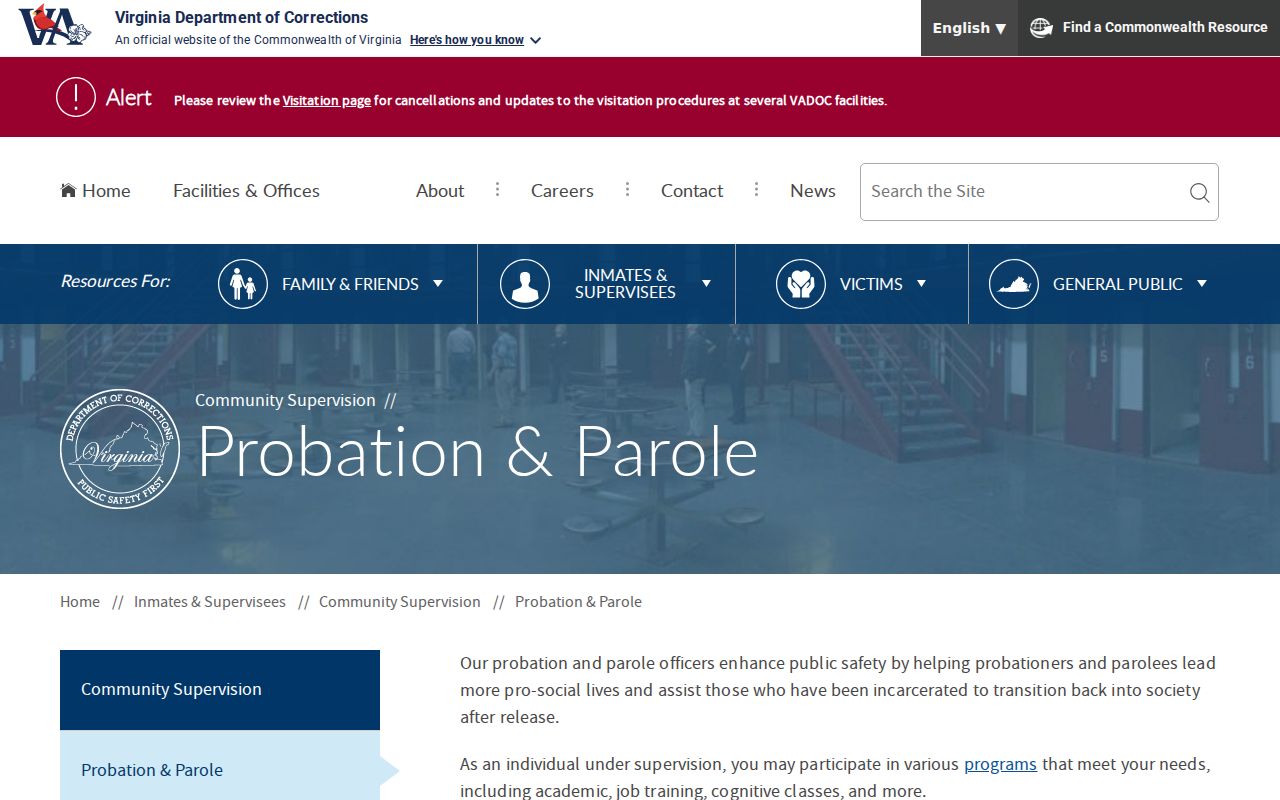
VADOC's locator is updated daily but warns that information can be inaccurate or out of date. The Virginia Parole Board handles eligible parole decisions, while VADOC officers provide field supervision.

Most Virginia felonies committed on or after January 1, 1995, are outside traditional discretionary parole, subject to statutory exceptions. The court sentence and VADOC record should be read together.
Public Access Laws
Virginia law treats a sheriff report, a court file, a repository history, and a registry profile differently. The Virginia Freedom of Information Act creates access to public agency records but preserves exemptions and allows reasonable actual-cost charges. Court inspection rests on the clerk-record statute. Repository dissemination follows its own limits. Sealing and expungement can remove eligible records from ordinary public view. Ask the actual custodian for the exact file instead of using VFOIA as a substitute for SP-167 or a clerk request.
Access also depends on the record's contents and status. A clerk can provide a public case file but not protected juvenile data. Law enforcement can redact sensitive personal facts or withhold qualifying investigative material. VSP can release a repository response only through a route authorized by the dissemination statute. When a public copy is needed for proof, ask the clerk whether a plain or certified copy fits the purpose and request the current fee before ordering.
Key Virginia statutes:
Virginia Code § 2.2-3700 et seq. gives access to public records subject to exemptions and reasonable actual costs.
Virginia Code § 19.2-389 controls criminal-history dissemination through the state repository.
Virginia Code § 17.1-208 governs inspection and copying at a clerk's office.
Virginia Code § 19.2-392.2 provides the petition route for eligible expungement matters.
Lee County Records Not Online
Lee County has no verified live jail roster, public warrant-name search, town police report portal, or single online criminal-history database. The fallback is not guesswork. Send a narrow VFOIA request to the agency that created the report, contact the correct court clerk for case documents, and ask the sheriff directly about current local custody or sheriff-held process. A request should name the record, date range, location, incident or case number, useful names, delivery format, and cost ceiling.
The three main Jonesville counters share the courthouse street address but remain separate custodians. Lee Circuit Court keeps felony trials and expungement filings. Lee General District Court keeps misdemeanors, traffic cases, felony preliminary matters, bond hearings, and arraignments. The sheriff occupies Suite U101 for sheriff-created records. Circuit Clerk hours are 8:30 a.m. to 4:30 p.m. at (276) 346-7763. General District Clerk hours are 8:00 a.m. to 4:00 p.m. at (276) 346-7729. No official sheriff records phone, fee schedule, or posted turnaround was verified, so do not infer one.
Lee Circuit Court Clerk
33640 Main Street, P.O. Box 326
Jonesville, VA 24263
(276) 346-7763
Weekdays, 8:30 a.m. to 4:30 p.m.
Lee General District Court
33640 Main Street, Suite 209, P.O. Box 306
Jonesville, VA 24263
(276) 346-7729
Weekdays, 8:00 a.m. to 4:00 p.m.
Lee County Sheriff's Office
33640 Main Street, Suite U101, P.O. Box 177
Jonesville, VA 24263
Records phone and hours were not posted.
Lee County Charges and Warrants
Virginia classifies felonies from Class 1 through Class 6 and misdemeanors from Class 1 through Class 4, with some offenses carrying their own unclassified penalty. General District Court tries misdemeanors and conducts felony preliminary proceedings. Circuit Court tries felonies and hears district-court appeals. The class shown at arrest may change before judgment, so the filed charge, final result, and sentence must be read as separate fields. A district-court misdemeanor appeal also reaches Circuit Court for a new trial.
Lee County has no verified public warrant-name search. Ask the sheriff about sheriff-held active process, the General District clerk about a known district case or bench capias, and the Circuit clerk about process in a felony case. OCIS may reveal a related public case, but it is not a live warrant-clearance tool. Unserved, sealed, or safety-sensitive process may remain unavailable. Anyone resolving their own warrant should confirm the issuing court, arrange the proper appearance through authoritative channels or counsel, and obtain written proof after the court acts.
Sealed, Expunged & Restricted
Lee County juvenile case data is not available through the public online Judiciary search. Sealed or expunged matters, protected victim and minor details, Social Security numbers, financial identifiers, and some active investigative material are also removed or withheld. Repository non-conviction disclosure depends on Virginia Code § 19.2-389 and the requester's authorized product.
Expungement and sealing are distinct Virginia mechanisms. Under the version of § 19.2-392.2 effective through November 30, 2026, eligible acquittals, nolle prosequi results, qualifying dismissals, mistaken identity, and specified innocence relief can support a petition. Lee filings go to Circuit Court, with service on the Commonwealth's Attorney. Chapter 23.2 separately governs automatic and petition sealing. Neither relief should be assumed from a charge name alone. Use the version in force on the filing date and verify the court search and VSP history after an order or statutory action.
Lee County Record Sealing in 2026
Virginia's 2025 and 2026 sealing rollout makes dates part of the Lee County record check. The Judiciary now publishes criminal sealing forms, while Chapter 23.2 sets automatic and petition routes, limits, later permitted uses, and transition rules. An amendment to the expungement statute takes effect December 1, 2026, so the displayed Code version must match the filing date. A stale summary can apply the wrong rule.
A person reviewing their own record should obtain the final disposition, inspect the operative statute, file through the Lee Circuit Court when the law directs, keep the signed order, and later compare the public court view with the VSP response. If one source still displays restricted material, send that source the order and dispute the mismatch. Expungement or sealing does not make every independent system update at the same instant.
- Disposition
- The result entered for a charge, such as dismissal, acquittal, or conviction.
- Nolle prosequi
- A prosecutor's decision not to proceed with a charge at that time.
- Sealing
- A limit on public access that preserves records for uses the statute still allows.
- Expungement
- Virginia's statutory removal of eligible police and court records from ordinary access.
Lee County Federal Record Layer
Lee County lies in the Western District of Virginia, and federal criminal files do not appear in Virginia OCIS. PACER is the official federal docket and document system. It requires registration, charges $0.10 per page with a typical $3 document cap, and waives quarterly charges when the account total is $30 or less. The county location does not change the custodian: federal documents remain with the federal court. PACER's official access page marks the point where a Lee County criminal-record search leaves the Commonwealth system.
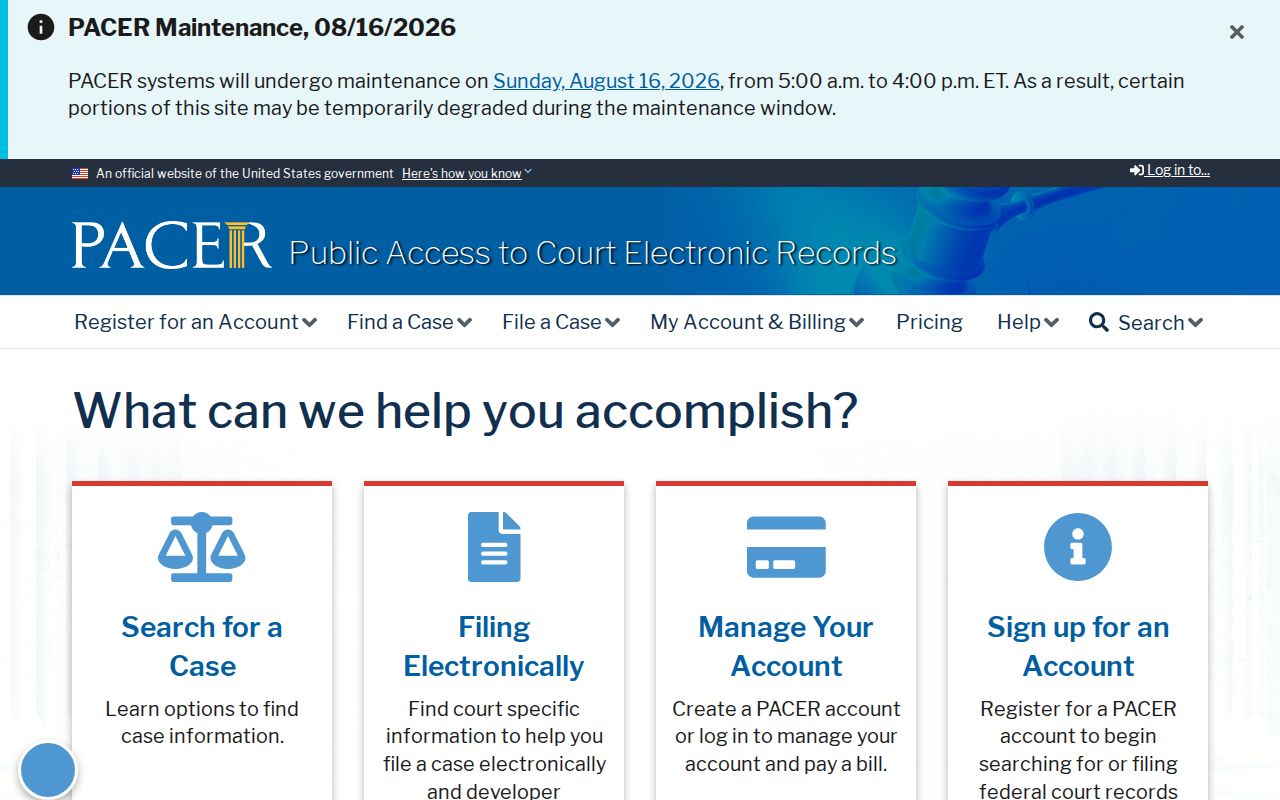
For your own fingerprint-supported federal history, the FBI Electronic Departmental Order portal accepts Identity History Summary orders.
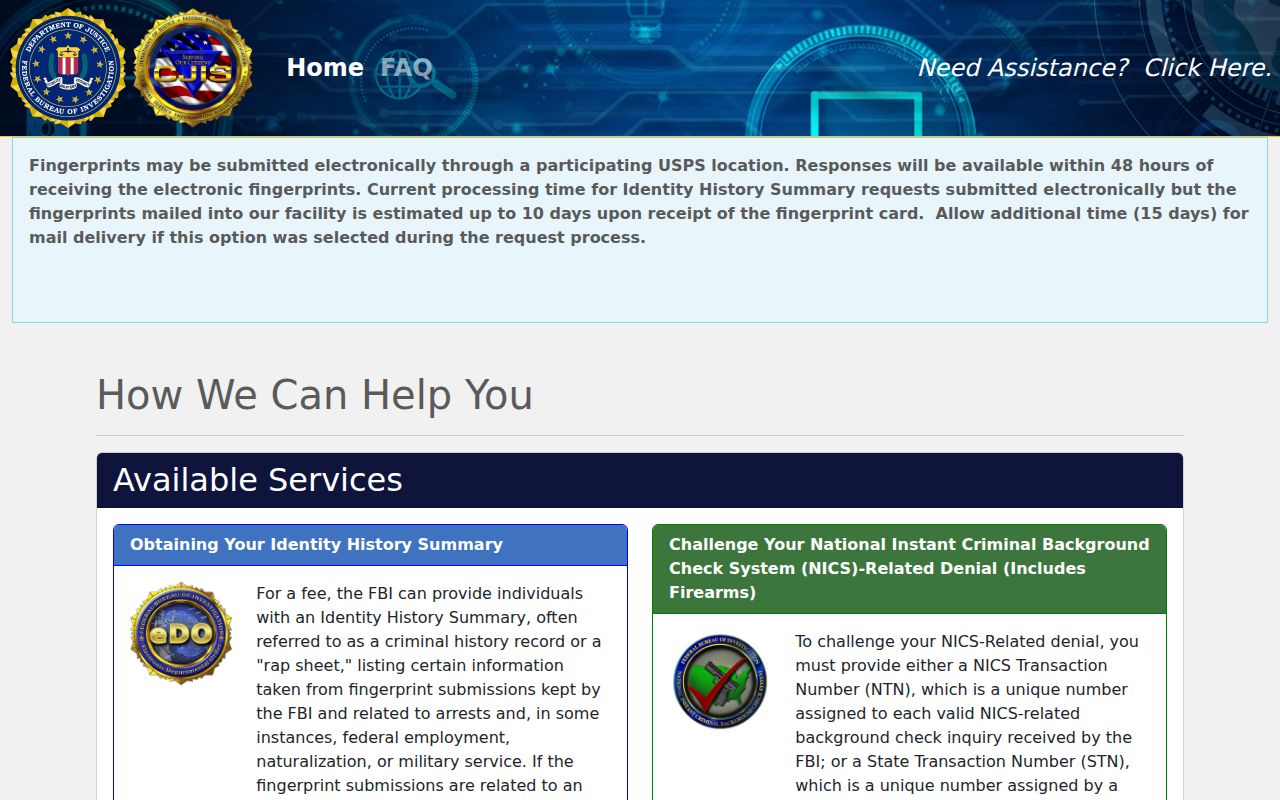
Federal custody is separate again. The BOP Inmate Locator covers federal prisoners, including people associated with USP Lee.
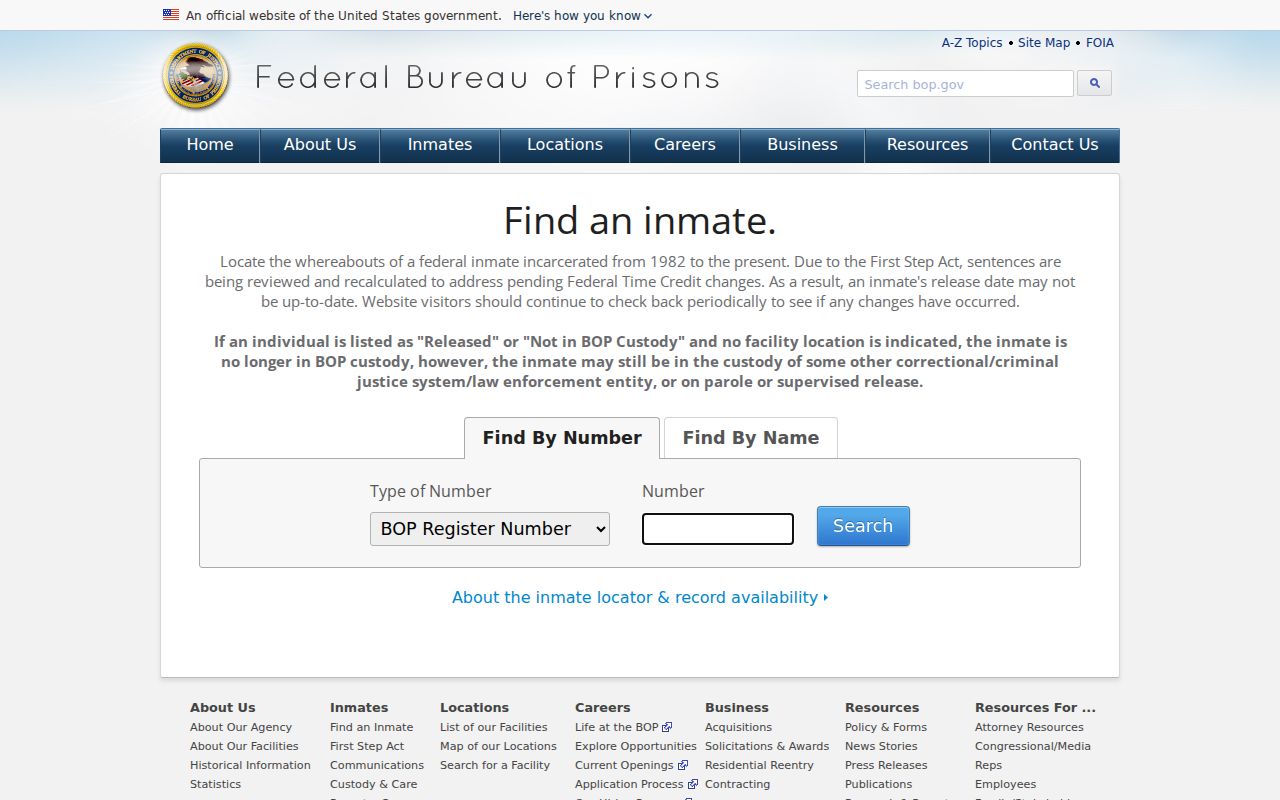
None of these federal tools replaces a Lee County sheriff inquiry, a VADOC search, or a Virginia court file.
Criminal Records by City in Lee County
Lee County has two incorporated towns. Pennington Gap and Jonesville police create their own reports, but neither town has a separate municipal court database verified in the research. Their cases route through Lee General District Court, with felony matters moving to Circuit Court when certified or indicted. The official court calendar separates Jonesville police matters on the first Wednesday and Pennington Gap police matters on the third Wednesday. Start with the town agency for its narrative, then use the county court channel for the filed charge and outcome.
No third town page is added for an unincorporated community. Pennington Gap is the larger incorporated town, while Jonesville is the county seat and location of the court and sheriff counters. Each town record search still begins by identifying whether the officer was town police, a sheriff's deputy, or a state trooper.
Pennington Gap Criminal History
2020 population 1,594 · Town police cases use the third-Wednesday Lee GDC docket.
Jonesville Criminal History
2020 population 995 · Town police cases use the first-Wednesday Lee GDC docket.
Lee County Courthouse Record History
Lee County's older criminal records sit behind an unusual courthouse history. The first courthouse was built in 1794 and burned during the Civil War in 1863. Its replacement burned on February 13, 1933. The present Neo-Classical courthouse rose in 1933 and 1934, with a west addition completed in 1978. Those losses and moves help explain why a historical record may need clerk or archive help even when modern files are searchable online.
The official county overview places Jonesville and Pennington Gap in Lee County's wider civic setting.

Lee County is Virginia's southwestern-most county and borders Kentucky and Tennessee. A Virginia court, registry, or custody search does not cover those neighboring states. Broadband subscription was 75.8 percent in the 2020 through 2024 Census measure, which reinforces the value of mail, phone, and counter options. For older or missing Lee County criminal records, note the court level and approximate date before calling the clerk.